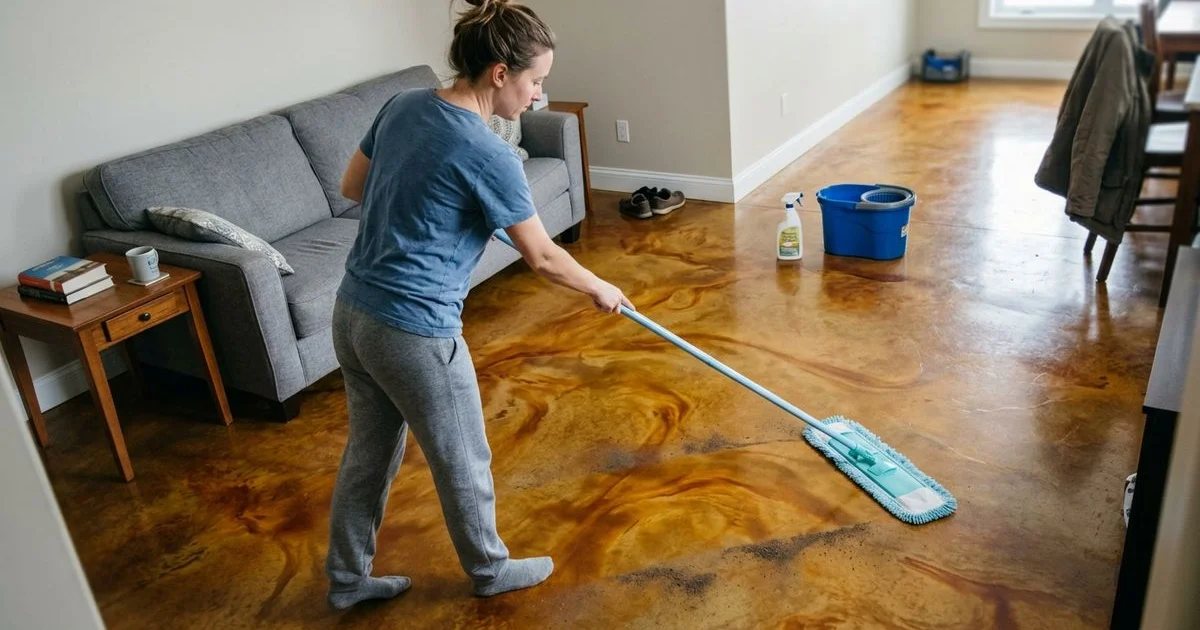
The color is permanent, the topcoat is not
This is the whole logic of maintaining a stained floor. The acid stain has reacted chemically with the concrete, and that color is not going anywhere. What sits above it, a solvent-borne polyurethane or a polyaspartic clear coat, is a sacrificial wear layer.
Everything that follows is about protecting that layer, because as long as it is intact the floor looks the way it did on the day it was finished. Full detail on the coating systems we use is on our acid-stained concrete floors page, and what acid-stained concrete is explains why the color beneath that topcoat cannot wear away.
Everyday cleaning
Dust mop first, always. Grit is what actually damages a floor. Sand and small debris tracked in from outside act like sandpaper under foot traffic, and they wear a topcoat far faster than cleaning products do. A microfiber dust mop two or three times a week does more for the floor than anything else on this list.
Damp mop with a pH-neutral cleaner. Warm water and a neutral floor cleaner. Wring the mop out properly; standing water sitting on any coating is not helpful.
Wipe spills promptly, particularly anything acidic. Wine, citrus juice, and vinegar left to sit will etch a topcoat.
What to keep away from it
| Avoid | Why |
|---|---|
| Vinegar, citrus cleaners | Acidic, etches the topcoat |
| Ammonia-based cleaners | Degrades polyurethane over time |
| Bleach | Can dull and discolor the coating |
| Abrasive pads, scouring | Scratches through the wear layer |
| Rotary machines with aggressive pads | Burnishes through coating quickly |
| Furniture without felt pads | Point-load scratching |
The general principle: the topcoat is a clear plastic film. Anything you would not use on a polyurethaned wood floor, do not use here.
The cheapest protection there is
A doormat at every entry and felt pads under every piece of furniture. Grit and point loads cause more topcoat wear than any cleaning mistake.
Recognising when it is time to recoat
Four signs, usually appearing together:
Loss of sheen in traffic lanes while edges and under-furniture areas still look glossy. This is the clearest indicator, and it is why comparing a walked-on area to a corner is a good test.
Water stops beading. Drop some water on the floor. If it beads, the coating is intact. If it spreads and darkens the concrete, the coating is thin or gone.
Marks appearing more easily. Spills that used to wipe up now leave a ghost.
Visible micro-scratching catching the light in high-traffic paths.
The recoating process
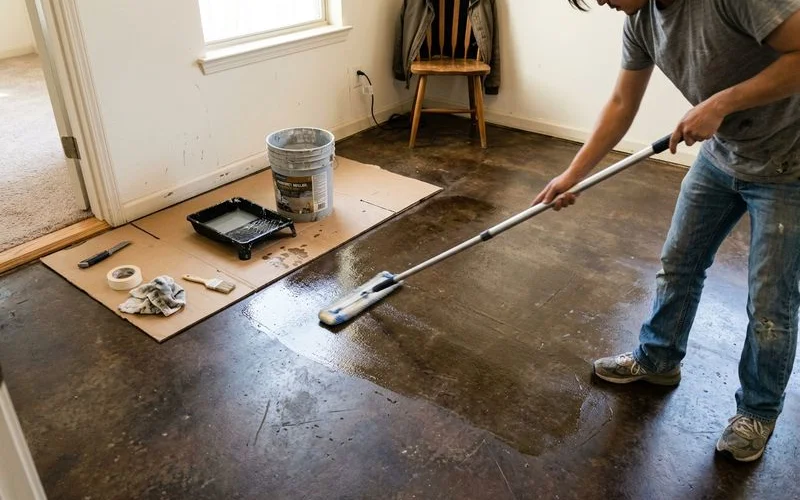
Recoating is not a redo. The stain stays exactly as it is; a new clear coat goes over the existing one.
The floor is cleaned thoroughly and degreased. The existing coating is lightly abraded to give the new coat something to key into. Then one or two coats of compatible topcoat go down, with cure time between them.
Compatibility matters. Putting an incompatible product over an existing coating causes adhesion failure, and fixing that means stripping the whole floor. This is worth having done rather than guessed at, and it is part of our resealing services.
Interior floors typically want this every three to five years. Exterior stained surfaces, which take UV and weather, want it every two to three.
Exterior stained surfaces
Stained patios and entries follow the same logic with a shorter cycle and one addition: the slip-resistant additive. Every recoat on an exterior surface should include it, because a fresh glossy coating without grip additive is noticeably more slippery when wet than the worn coating it replaced.
Keep de-icing salt off stained exterior concrete entirely. It attacks the coating and drives freeze-thaw damage in the slab beneath.