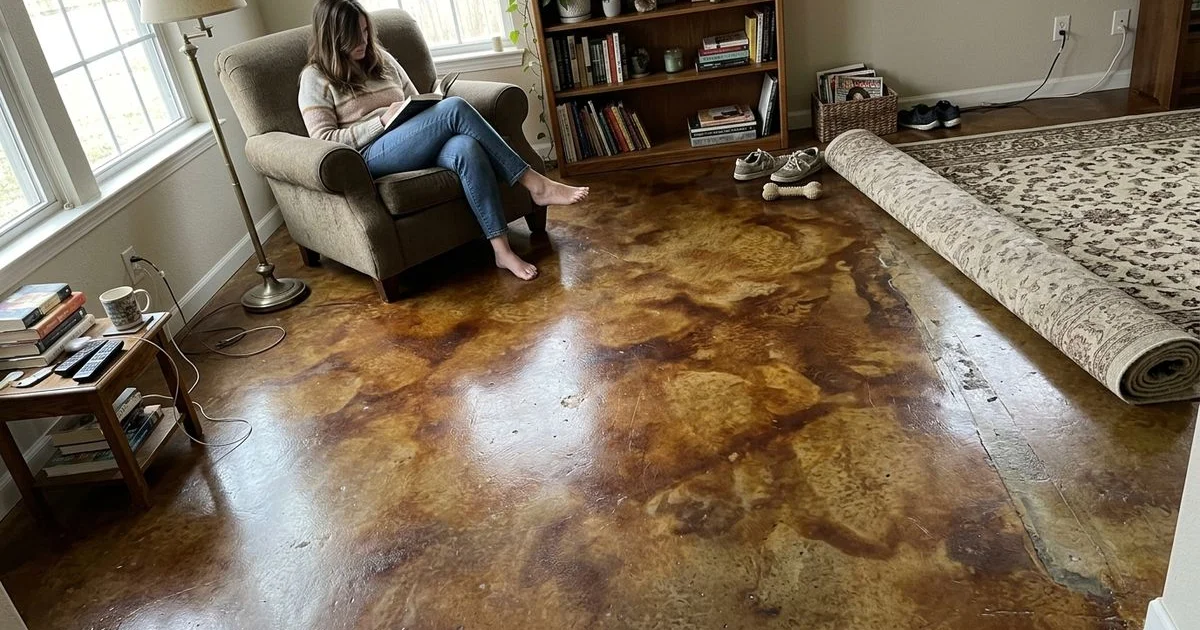
A chemical reaction, not a coating
Acid-stained concrete is concrete whose color has been permanently changed by a chemical reaction. A stain solution containing hydrochloric acid and metallic iron salts is applied to a prepared slab, where the acid opens the surface and the metallic salts react with free lime in the concrete. The result is color that is part of the material rather than a layer sitting on top of it.
This is why stained floors do not peel, chip, or wear through the way painted or epoxy-coated floors can. There is no film to fail. What can wear is the protective topcoat applied afterwards, and that is renewable.
Our full acid-stained concrete service covers the preparation and topcoat side of this in detail; this guide is about what the finish actually is and how it behaves. That no-film-to-fail distinction is also the heart of acid-stained concrete versus epoxy flooring, particularly on a basement slab.
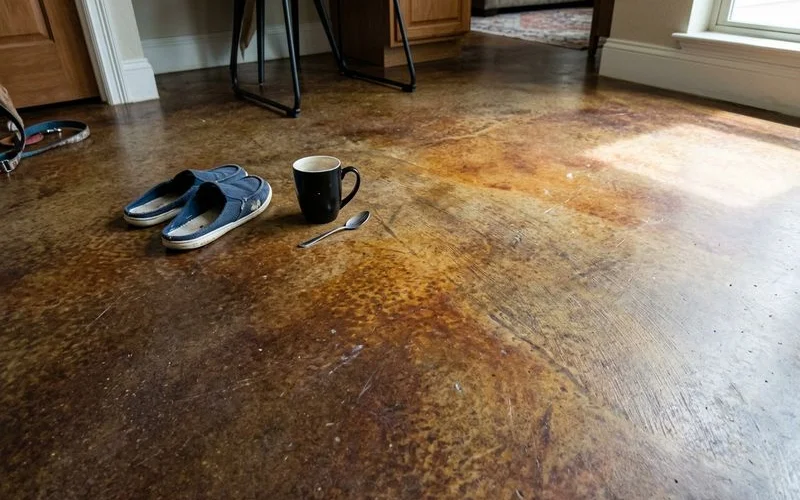
Why no two floors are the same
The reaction depends on what it finds. Concrete is not uniform: density varies across a slab, the surface was troweled harder in some places than others, moisture content differs, and older slabs carry decades of subtle variation.
Acid stain responds to all of it. Denser areas take color differently from more porous ones. A section that cured under a covered area behaves differently from one that cured in the sun. Old saw-cut joints, patches, and the edges where a pour met a previous section all show.
The result is translucent, mottled, variegated color with genuine depth, closer to natural stone or weathered leather than to a painted floor. Some people want exactly that. Others want uniformity, and for them a dye or a coating is a better fit.
Set expectations before you commit
Anyone promising an exact color match to a sample on an acid-stained floor is either misunderstanding the process or overselling it. We put test patches on your slab so the unpredictability is something you have seen rather than something you discover.
Stain versus dye
Acid stain reacts chemically. Earth tones, translucent, mottled, permanent. Limited palette: browns, ambers, tans, and some greens and blue-greens.
Water-based acrylic dye penetrates rather than reacting. Much wider color range, more uniform result, and it can produce tones acid stain cannot reach. Slightly less UV-stable on its own, which matters outdoors.
Most of our floors use both. Acid stain establishes the reactive base with its variation, then dye pushes specific areas warmer or cooler and extends the range. Layered by hand, the two produce depth neither achieves alone.
Where stained concrete works
Basements and lower levels. The most common application in Chattanooga, because so many homes here have daylight basements with existing slabs. Staining adds no height, requires no subfloor, and turns a utility floor into finished living space.
Living areas and sunrooms. Anywhere a slab already exists and the look suits the room.
Patios, entries, and pool surrounds. Stained concrete works outdoors with a UV-stable topcoat. Traction is the consideration: a smooth stained surface gets a slip-resistant additive in the sealer, or the stain is applied over an already-textured surface.
Garages and workshops are the one place we usually steer people elsewhere, because those spaces often want the chemical resistance a thick coating provides more than they want visual depth.
What it will not do
It will not hide a bad slab. Stain is translucent, so cracks, patches, previous repairs, and stains in the concrete will show through, sometimes attractively and sometimes not.
It will not produce a uniform commercial-looking floor. If uniformity is the goal, that is a different product.
And it will not survive without a topcoat. The color is permanent, but bare stained concrete stains, dusts, and marks. The protective coat is not optional, and renewing it every few years is what keeps the floor looking the way it did on day one.