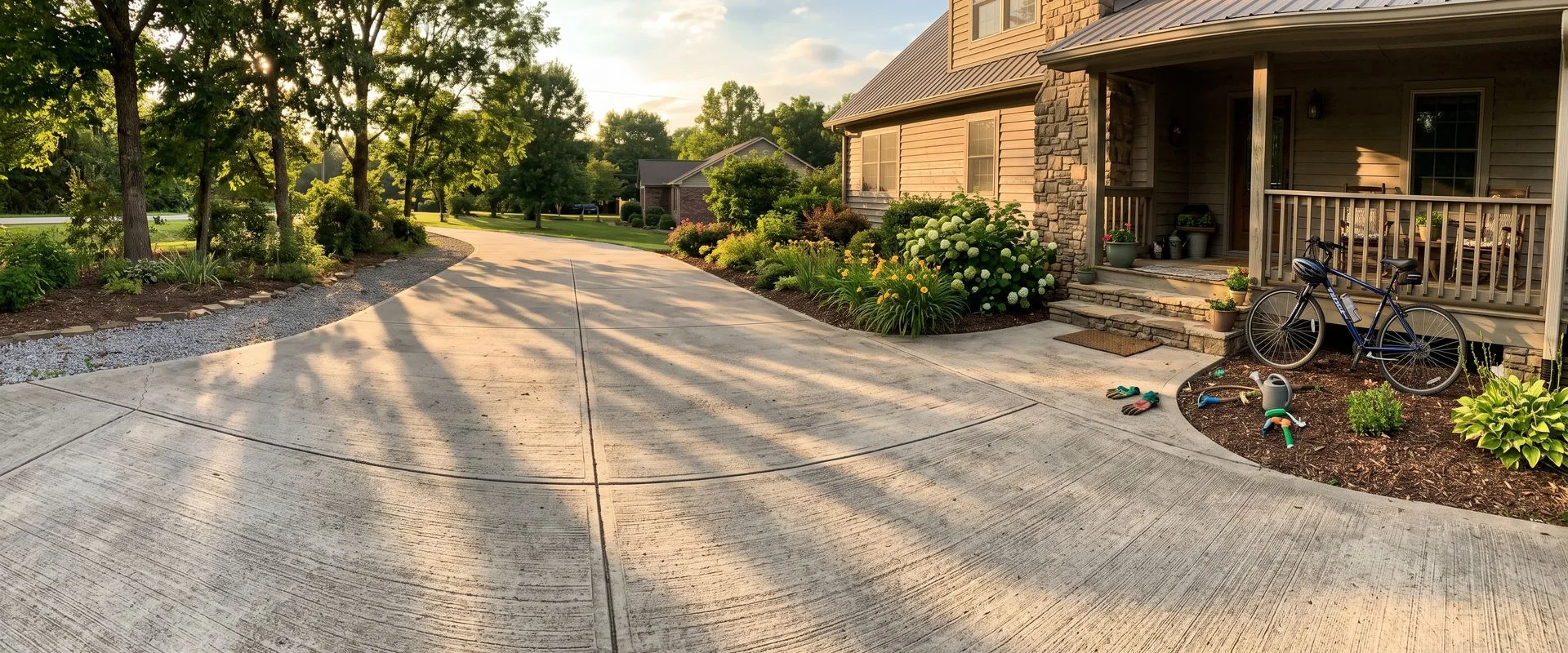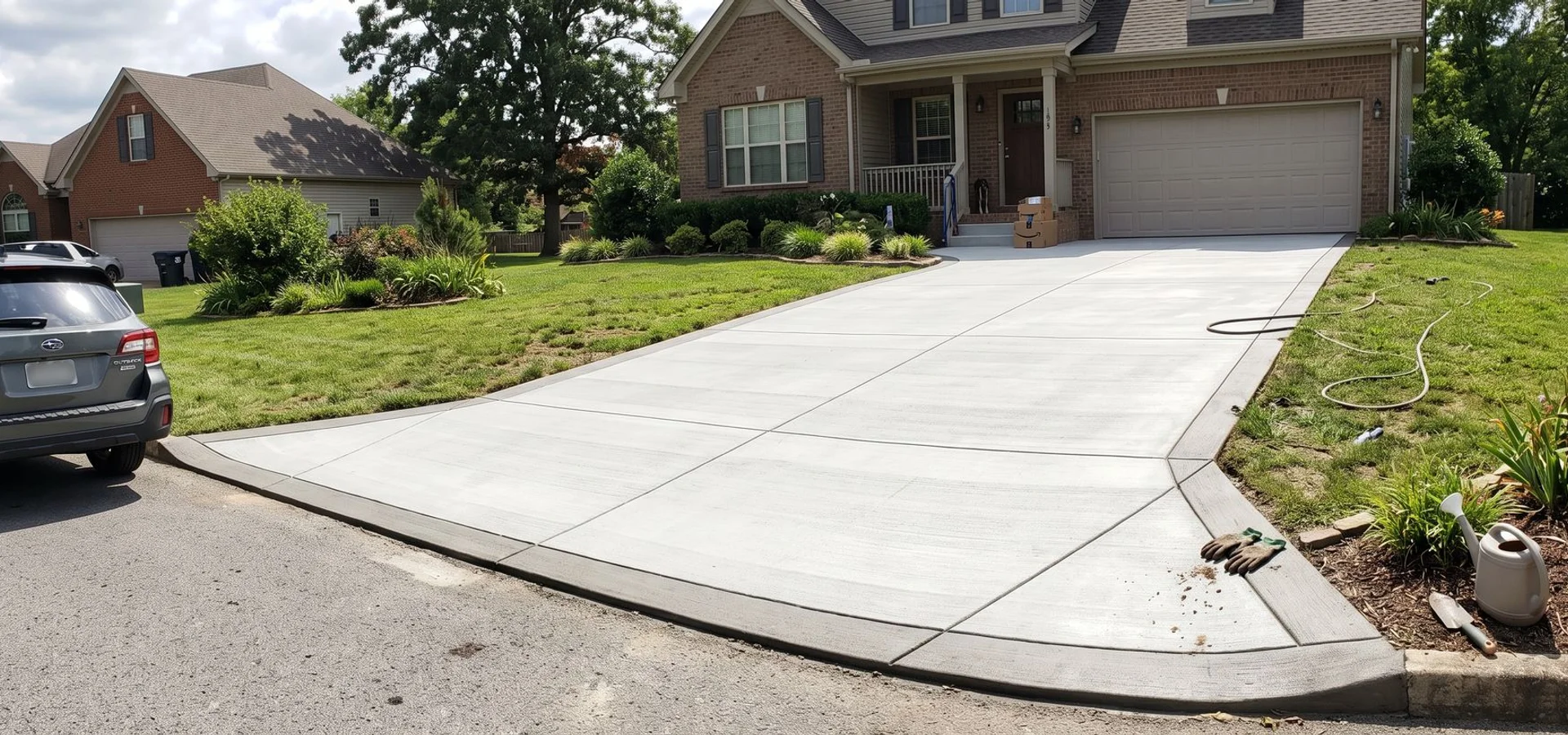
Driveways built to outlast the one they replace
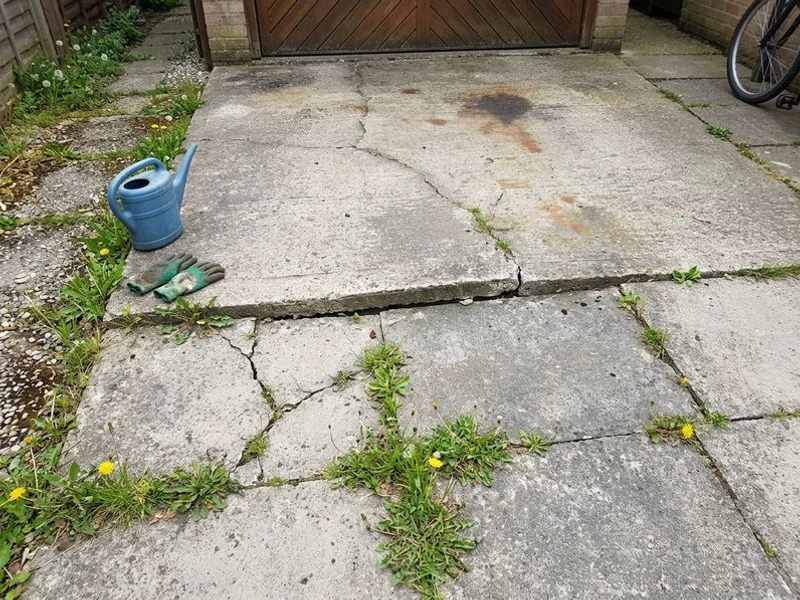
Most of the driveways we tear out around Hamilton County were poured four inches thick over bare clay with no steel in them, or with welded wire mesh that ended up lying on the ground instead of inside the slab. They lasted a while, then the base moved, and they broke into sections. That is not a concrete problem. It is a preparation problem.
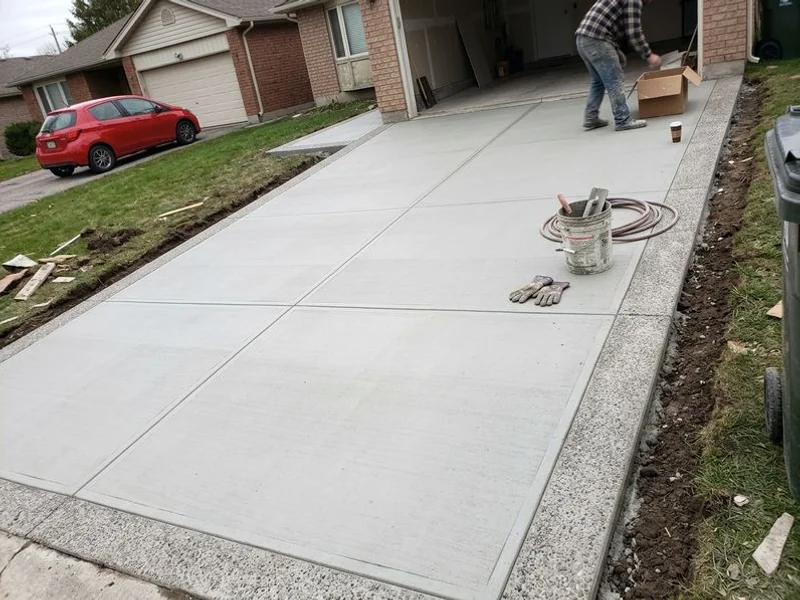
A Vances Concrete Craft driveway starts underground. We excavate to competent subgrade, place a crushed stone aggregate base and compact it in lifts, then tie a #4 or #5 rebar grid on chairs so the steel sits inside the slab where it can do structural work. On top of that goes a 4,000 PSI mix, screeded, floated, finished, and saw-cut on a control joint spacing suited to the slab dimensions and the grade.
What thick-gauge steel reinforcement actually does
Concrete is strong in compression and weak in tension. Every slab that carries a vehicle load flexes slightly, and the bottom face of that slab goes into tension every time. Steel placed inside the slab takes that tension. Steel lying beneath the slab takes nothing.
That is the whole argument for tying a rebar grid on chairs instead of rolling out mesh and walking it in. It costs more in labor and material. It is also the difference between a slab that develops a few hairline cracks at the joints over 25 years and one that breaks into shifting plates in eight. Fiber mesh reinforcement goes into the mix as well on many of our pours, which helps with plastic shrinkage cracking during curing, but it complements steel rather than replacing it.
Common problems we solve
A driveway that has broken into sections
Deep cracking, sections at different heights, edges crumbling away. This is base failure, and no resurfacing product fixes it. Full replacement with proper excavation, compaction and reinforcement is the honest answer, and it is the only one that stops the cycle. If you are not sure which side of that line your slab falls on, our guide on whether to repair or replace a cracked concrete driveway walks through the assessment.
Water running where it should not
Chattanooga’s hillside lots send a lot of water downhill fast. If a driveway does not shed that water deliberately, it runs along the slab edge and undercuts the base. We set the grade of the slab to move water where we want it and add a swale or channel drain where the volume warrants it.
Steep grades on Signal and Lookout Mountain
Grades of 10 to 15 percent are common up the mountain, and placing concrete on a slope leaves no room for a second attempt. These pours get heavier steel, tighter joint spacing, a stiffer mix, staged placement working downhill, and a traction-first finish. Every one of them gets Arthur on site for the entire placement.
A drive that works but looks like nothing
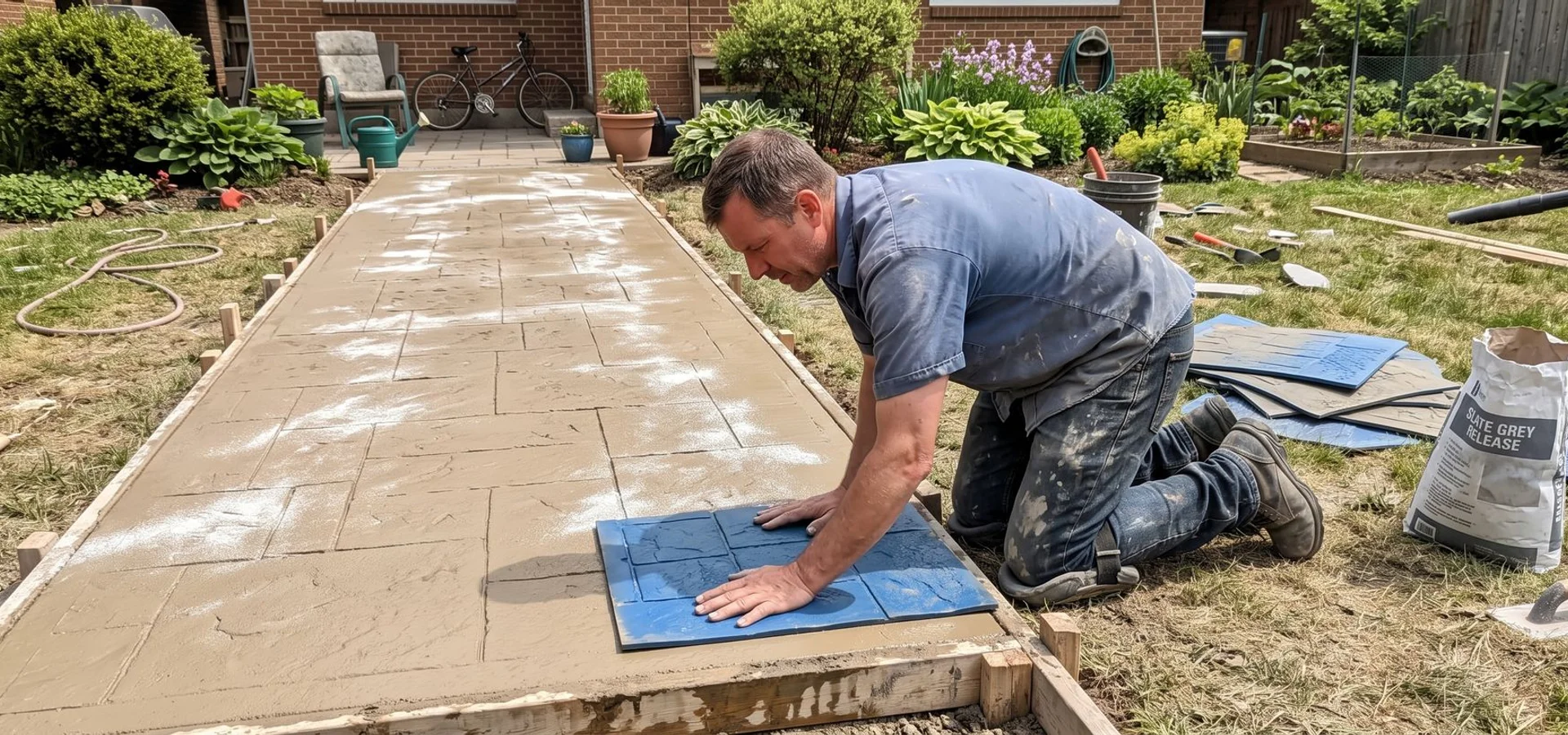
Plenty of driveways are structurally fine and visually dead. An exposed aggregate surface, a contrasting picture-frame border, or a stamped decorative section at the apron changes the front of a house without touching the structure underneath.
Finishes: broom, exposed aggregate, picture-frame
A broom finish is the workhorse. It is applied by dragging a broom across the surface while it is still setting, and the resulting texture gives excellent wet-weather traction at no extra cost.
Exposed aggregate washes the top layer of cement paste off the surface to reveal the stone in the mix. It is more visually interesting, extremely durable, and grips well on a grade. It also hides dirt and tire marks better than smooth concrete.
A picture-frame border is a contrasting band poured around the perimeter, often smoother or a different color from the main field. It frames the surface and finishes the transition to landscaping. Most of our driveway projects include one. Each of these choices moves the number, and our guide to concrete driveway cost in Tennessee sets out by how much.
Walkways, aprons and connecting paths
The same standards apply at smaller scale. Front walks get a compacted base and reinforcement, control joints at the right spacing, and a finish chosen for traction rather than looks alone. Where the walk meets a porch, steps, or an existing slab, expansion joints with elastomeric urethane joint sealant let the two move independently instead of fighting each other through a Tennessee winter.
How a properly built driveway compares
| Vances Concrete Craft | Typical low-bid concrete | Asphalt | |
|---|---|---|---|
| Base preparation | Excavate to competent subgrade, compacted stone in lifts | Pour over existing grade | Compacted aggregate |
| Reinforcement | #4-#5 rebar tied on chairs, inside the slab | Wire mesh laid on the ground | None |
| Mix | 4,000 PSI, air-entrained | Minimum spec | N/A |
| Typical service life | 25-30+ years | Breaks into sections in 5-10 | 15-20 years |
| Decorative options | Broom, exposed aggregate, stamped, borders | Broom only | Essentially none |
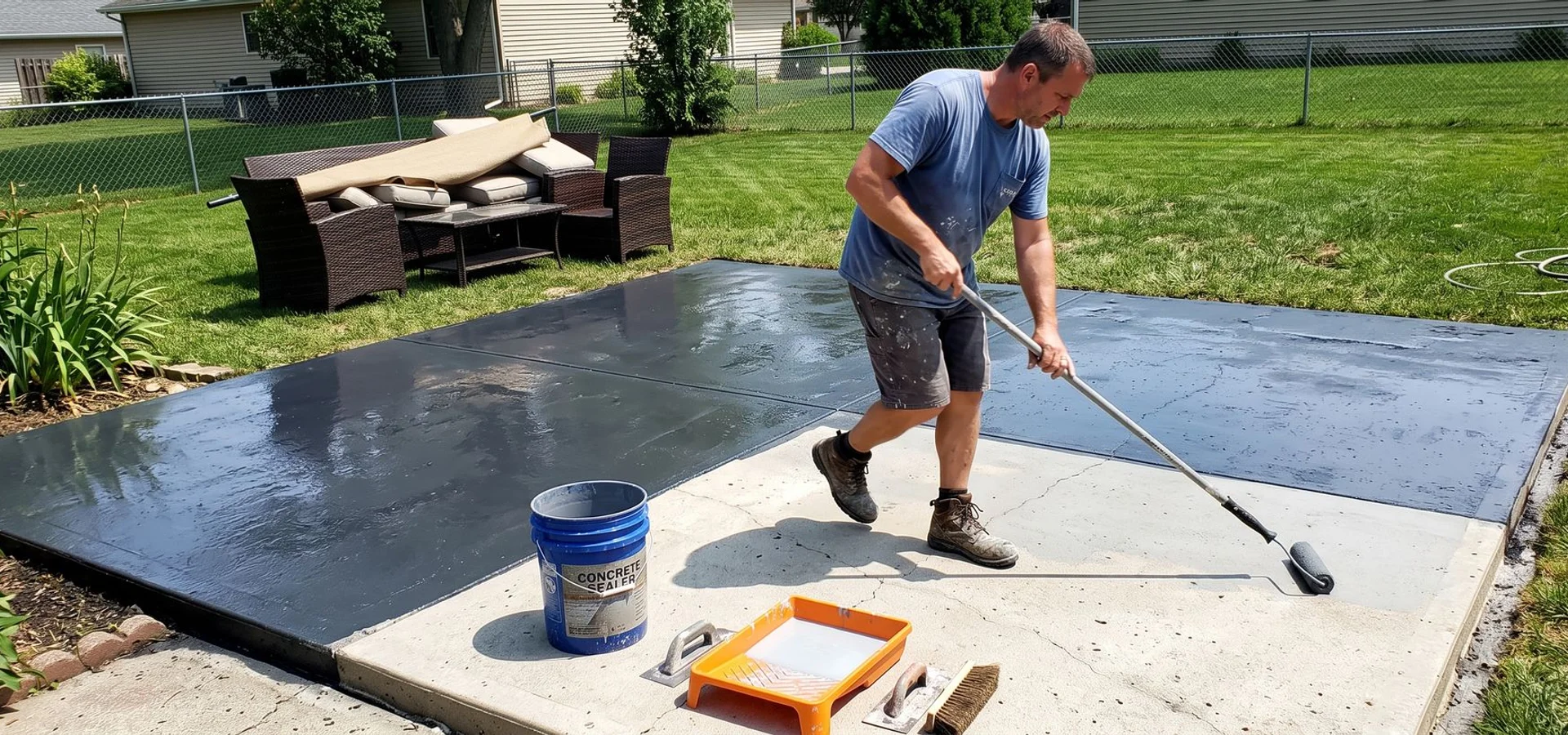
| Recurring maintenance | Seal every 2-3 years | Seal, then patch | Sealcoat every 3-5 years |
The material-level version of the third column is set out in concrete versus asphalt driveways in Tennessee.