The question underneath all the others
Every one of these signs is really asking the same thing: has the base failed, or is this a surface problem?
Surface problems are fixable. Spalling, worn finish, hairline cracking, and lost joint sealant can all be addressed for a fraction of replacement cost. Base problems are not fixable from the top, because whatever you put on the surface will move with the ground beneath it.
Learning to tell them apart is most of what follows.
Sign 1: cracks with height difference across them
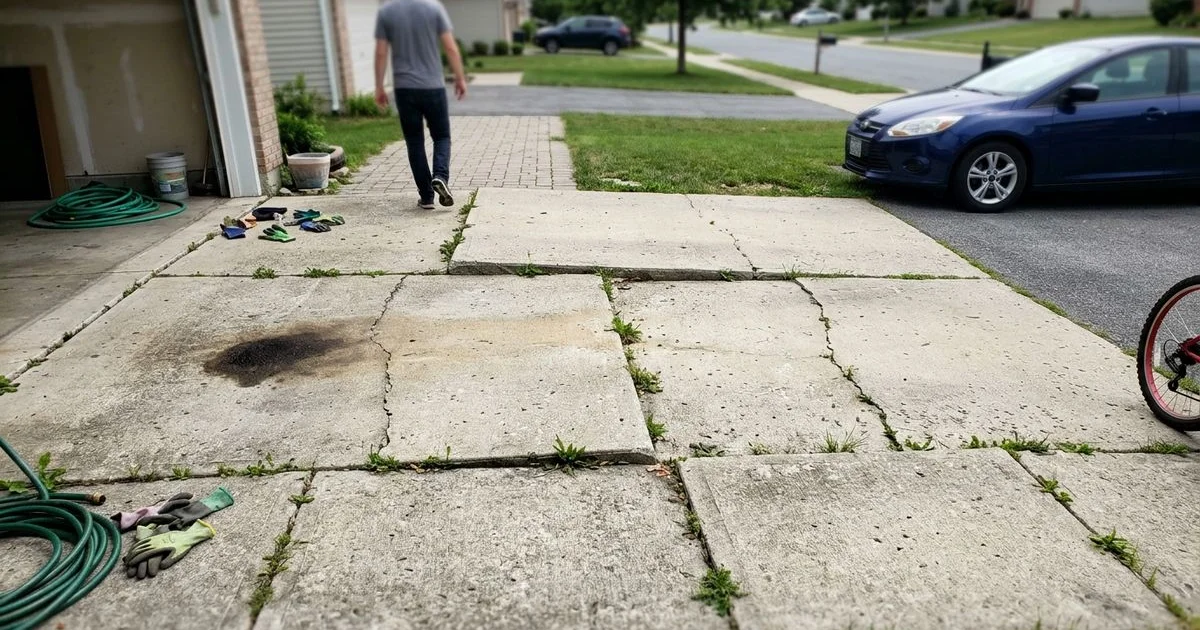
Run your hand across the crack. If both sides sit level, you are looking at shrinkage or thermal cracking, which is normal and cosmetic. If one side sits higher than the other, the slab has broken into pieces that are now moving independently, which means the support beneath them is uneven.
Height difference is the single most reliable indicator that replacement is on the table. Once sections move independently, they will keep moving, and every winter accelerates it.
Width matters too. Hairline cracks you can barely see are fine. Cracks you could fit a coin into are letting water straight into the base, which compounds the problem.
Sign 2: heaving
A section that has lifted above its neighbours is heaving, typically from frost action in saturated ground, tree roots, or expansive clay. Whatever the cause, the slab is being pushed from below.
Filling the cracks around a heaved section does nothing. The force that lifted it is still there. Replacement with proper excavation and a free-draining compacted base, plus root management where a tree is involved, is what solves it.
Sign 3: settling and pooling water
The reverse problem: sections that have dropped, usually where fill was never compacted or where water has been washing material out from beneath the slab for years.
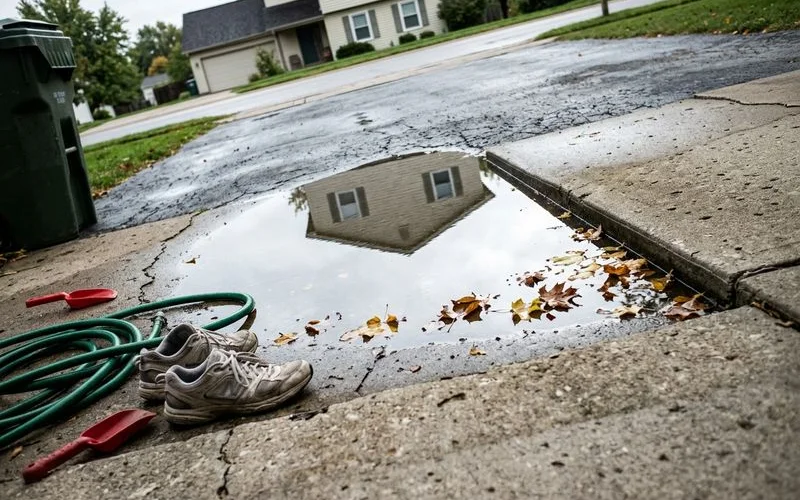
The tell is standing water. A driveway that holds puddles after every rain has settled somewhere, and that puddle is now accelerating the process by keeping the base saturated and feeding freeze-thaw cycles.
Do the rain test
Walk your driveway during or just after heavy rain. Standing water, water running toward the garage, or water disappearing along an edge all tell you something about the slab and the base that you cannot see on a dry day.
Sign 4: widespread spalling
Flaking, chipping, and patches of missing surface, usually worst near the road where de-icing salt concentrates. In isolation this is a surface problem and can be resurfaced.
It becomes a replacement conversation when it is widespread, when it has gone deep enough to expose aggregate over large areas, or when it has reached the point of exposing reinforcement, because steel that is exposed will corrode and expand, which damages the slab from inside.
Sign 5: edge failure and crumbling
Concrete breaking away along the outside edges of the slab usually means the base was never supported out to the edge, or that water has been running along the perimeter and washing it out. It is progressive: once the edge goes, the unsupported area extends inward.
Sign 6: a map of cracks rather than a few of them
One crack is a slab doing what slabs do. A network of cracks across the whole driveway, particularly in a pattern rather than in one location, tells you the slab lacks the reinforcement or thickness to handle its loads, or that it is sitting on ground that moves.
That pattern is common on driveways poured four inches thick over bare clay with no steel, which describes a great many mid-century driveways around Hamilton County.
What to do with what you have found
If you have height difference, heaving, settling, or a network of cracks, plan for a full concrete driveway replacement with proper excavation, a compacted stone base, and thick-gauge steel tied on chairs. That is the only intervention that stops the cycle.
If the slab is level, cracks are cosmetic, and the damage is confined to the surface, restoration is the honest and far cheaper answer.
For a structured way to weigh the two against cost, the repair or replace decision guide walks through the thresholds.