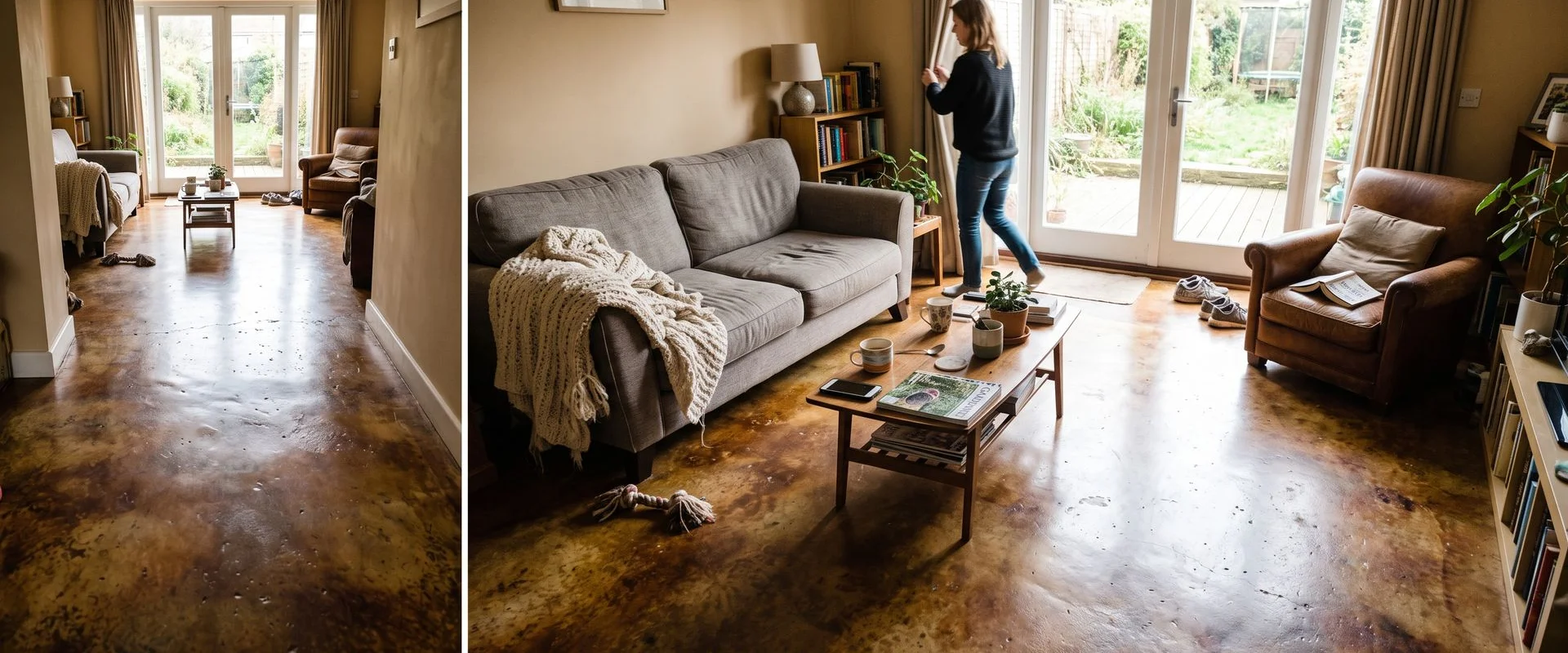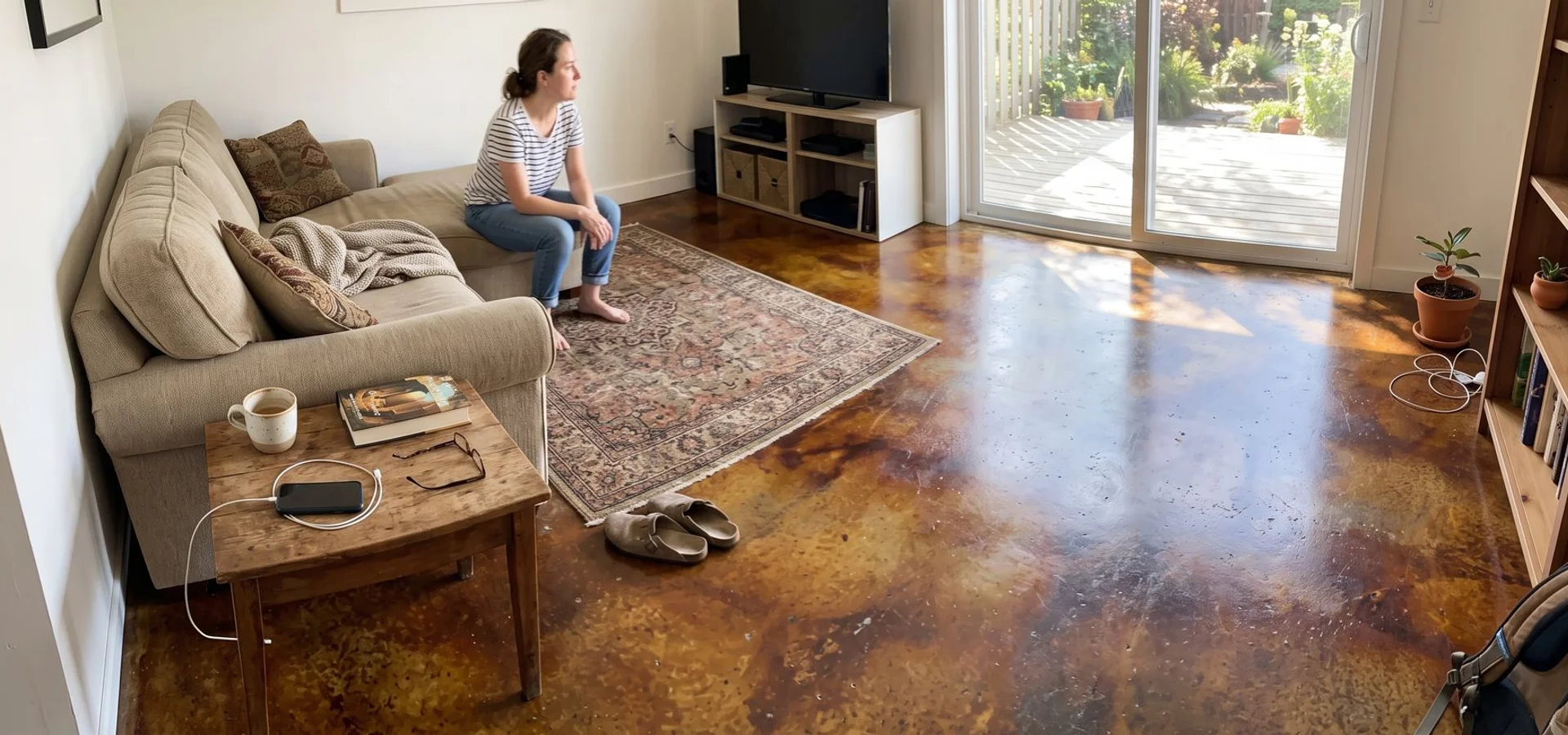
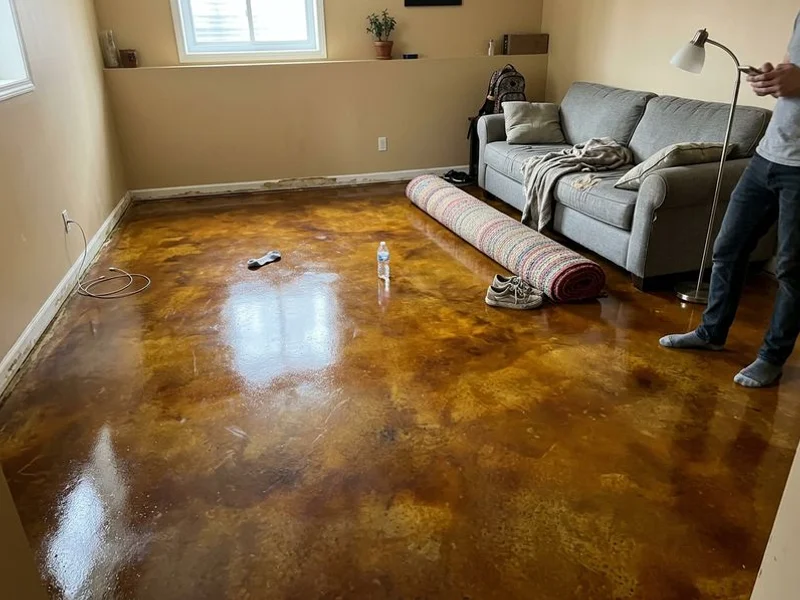
Mottled amber and brown acid-stained concrete floor in a finished daylight basement
One-of-a-kind

Acid-Stained & Dyed Concrete Floors in Chattanooga

Rich, translucent multi-toned staining for interior and exterior floors with durable commercial topcoats.

  • Licensed, Bonded & Insured
  • 17+ years independent
  • 450+ projects
  • Owner on-site for every pour
Call (423) 555-0142 Free design consultation
Typical range $6-$11 per sq. ft.
  • 5.0 (40+ Google reviews)
  • Licensed, Bonded & Insured
  • 450+ projects completed
  • 17+ years, owner on every pour

A floor that reacts, rather than a floor that gets painted

Acid staining is a chemical process. Hydrochloric acid stain carrying metallic iron salts is applied to a prepared slab, where it reacts with the free lime in the concrete and permanently alters the color of the material itself. Nothing sits on top waiting to peel. Where the slab is denser, the reaction is different. Where it was troweled harder or cured faster, the color shifts again. The result is a translucent, mottled, variegated surface that no manufactured product imitates convincingly, and that no two floors ever repeat.

Vances Concrete Craft uses acid stain and water-based acrylic dye together on most projects. Stain gives the reactive earth-tone depth; dye extends the color range and lets us push specific areas warmer or cooler by hand. Layered carefully, the two produce floors with genuine depth rather than flat, sprayed-on color.

Why preparation is most of the job

If the stain cannot reach the concrete, it cannot react with it. Old adhesive from carpet or tile, a previous sealer, curing compound, paint splatter, or years of surface contamination will all block the reaction and show up as blotches with hard edges in the finished floor.

So every project begins with diamond grinding. We take the surface down to a consistent, open profile in the CSP-1 to CSP-3 range using dust-extracted grinders, which removes contamination and gives the stain a uniform surface to work against. Before that, we run a moisture vapor emission test, because Chattanooga’s hillside and daylight basements often move water vapor up through the slab, and no topcoat survives being applied over a wet floor.

That sequence, test, grind, then stain, is where the budget-driven operators cut corners and where stained floors go wrong.

Common problems we solve

A basement that reads as storage, not living space

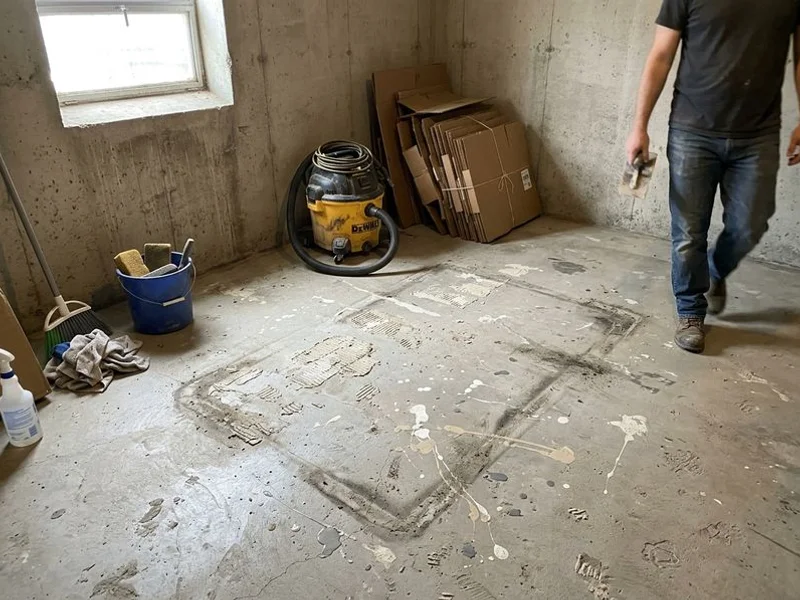
A bare gray slab with adhesive ghosting and dust makes a lower level feel unfinished no matter what furniture goes in it. A layered stain with a polyurethane topcoat turns the same floor into the surface the room is built around, and it does it without adding height, subfloor, or moisture-trapping layers.

Epoxy that peeled

We are called in regularly to remove failed epoxy from basement slabs. Usually the cause is vapor drive: the slab was carrying moisture, the coating sealed it in, and the film lifted. Staining leaves the slab far more breathable, which is why it suits Chattanooga basements better than a thick film coating. Our guide comparing acid-stained concrete and epoxy flooring covers the moisture testing that should come before either one.

A patio surface with no character

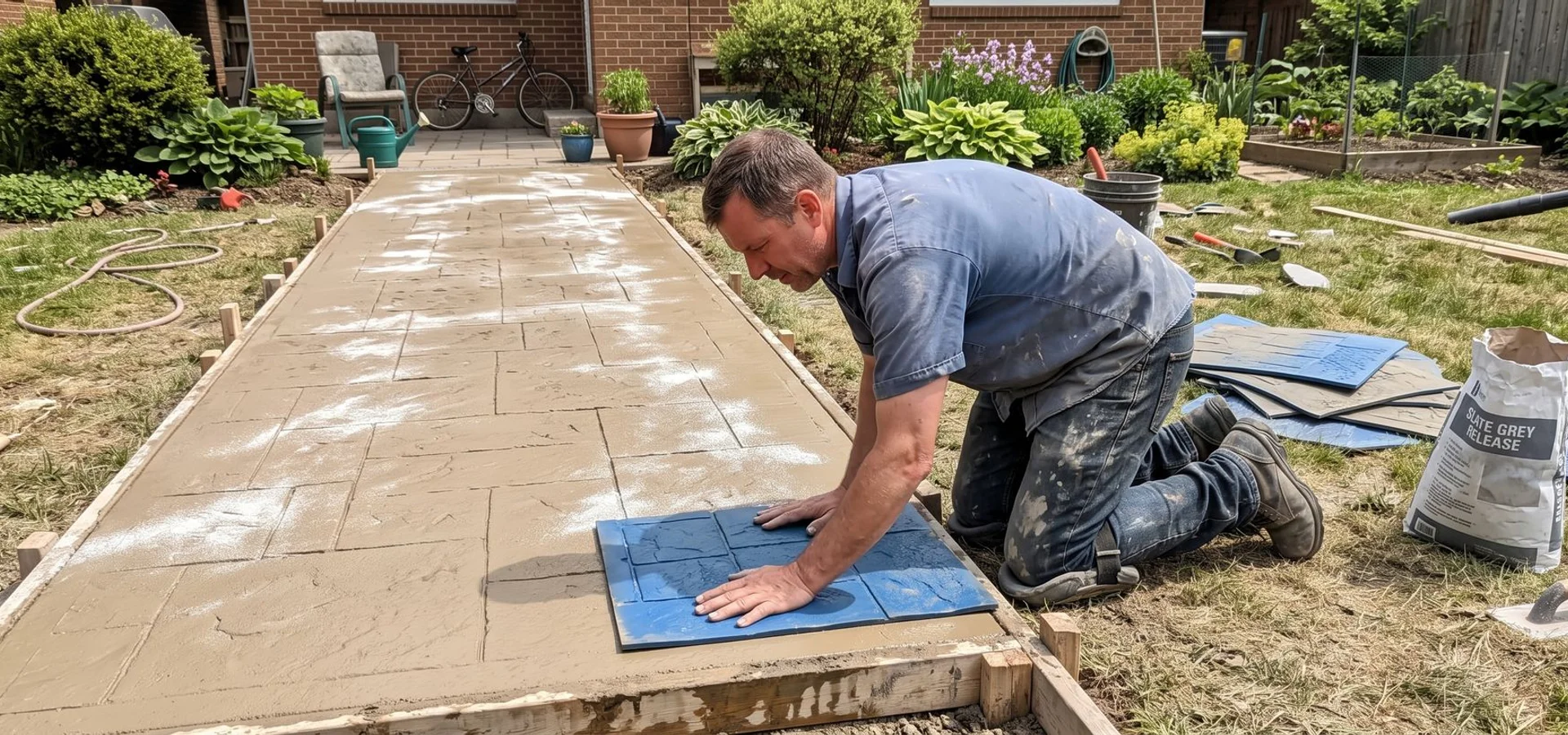
Exterior stained concrete works well when the topcoat is UV-stable. Patios, entries and pool surrounds take stain beautifully, and stained color can be combined with a stamped texture on the same surface for a finish with both pattern and depth.

Color that went flat

A single spray pass of stain leaves an even wash of color that looks like tinted concrete. Depth comes from layering, working color into some areas and pulling it back in others, then letting the reaction do what it does unevenly. That is hand work, and it is the reason to hire a craftsman for it.

Topcoats and what they are for

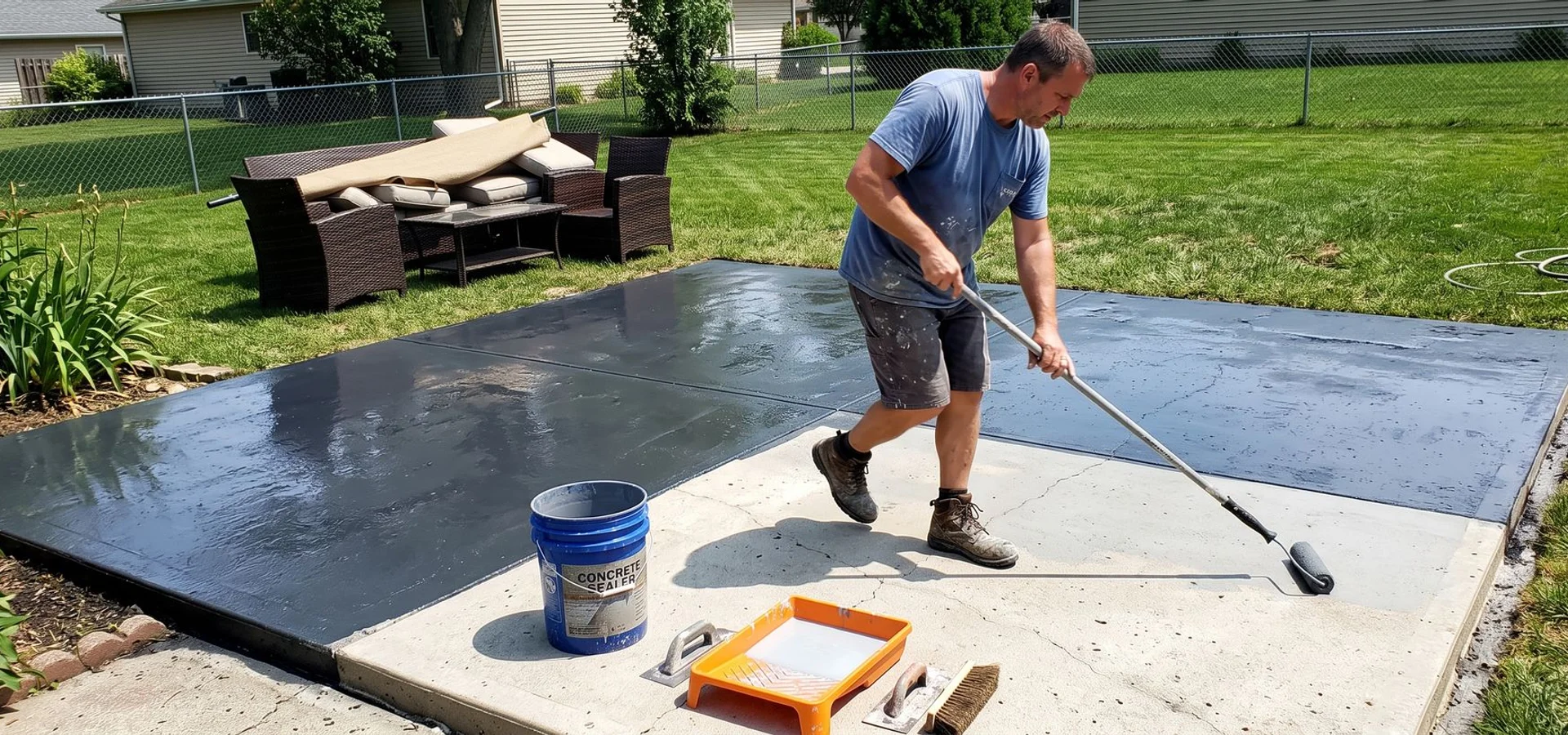
A solvent-borne polyurethane topcoat gives the richest depth and excellent durability, and it is our default for interior living space. Polyaspartic clear coat cures faster, returns the room to service sooner, and takes more abuse, which suits high-traffic areas and garages. Both are UV-stable, so sunlit rooms and exterior surfaces keep their color.

Whichever goes down, the slab is neutralized and rinsed until no residue remains first. Skipping the neutralizer wash leaves acid residue under the topcoat, and that failure shows up months later when nobody remembers why.

Keeping a stained floor looking new

Dust mop regularly, damp mop with a pH-neutral cleaner, and keep harsh acids, ammonia, and abrasive pads off it. The stain color itself is permanent; it is the topcoat that wears. Interior floors typically want recoating every few years depending on traffic, and exterior surfaces sooner. If your floor has dulled, a recoat restores it without redoing any of the color work. The full routine is in our guide to caring for stained concrete floors.

How acid staining compares to the alternatives

Acid-stained concreteEpoxy coatingPaint / concrete stain kit
How color is heldChemical reaction inside the slabFilm bonded to the surfaceFilm sitting on the surface
Behavior over a damp slabBreathes; survives vapor driveBlisters and delaminatesPeels
Installed cost per sq ft$6-$11Comparable to higherLowest
Wear behaviorColor is permanent; topcoat is renewableChips through to bare slabWears through quickly
AppearanceTranslucent, mottled, never repeatsUniform, opaqueFlat, opaque
RenewalRecoat the topcoat onlyGrind off and reapplyStrip and repaint

The moisture testing that should precede either choice is covered in acid-stained concrete versus epoxy flooring.
Transparent pricing

How Much Does Acid Staining Cost in Chattanooga?

Acid Staining runs $6 to $11 per sq. ft.. Where your project lands depends on prep, access, and finish complexity. Every quote is itemized in person before any work is scheduled.

Single-color stain

Sound slab, one stain color, acrylic topcoat

From $6 per sq. ft.
  • Moisture-vapor emission testing
  • Diamond grinding to an even surface profile
  • Single hydrochloric acid stain color
  • Neutralizer wash and acrylic topcoat
Get a quote
Most requested

Layered multi-tone

The finish that makes stained floors worth doing

From $8 per sq. ft.
  • Everything in the single-color finish
  • Two or more layered stain and dye colors
  • Hand-worked variegation for depth
  • Solvent-borne polyurethane topcoat
Get a quote

Premium / high-traffic

Heavy prep, saw-cut detail, polyaspartic finish

From $10 per sq. ft.
  • Everything in the layered finish
  • Aggressive prep for coated or contaminated slabs
  • Optional saw-cut borders and inlays
  • UV-stable polyaspartic clear coat
Get a quote

What moves the price

Surface preparation drives most of the cost. A clean, sound slab needing only a light grind sits at the bottom of the range. A slab with old adhesive, coatings, or moisture issues needs more aggressive diamond grinding and remediation, and layered multi-color work with a polyaspartic topcoat sits at the top.

Call (423) 555-0142 for a free in-person measurement and a firm number.

Why us

Why Choose Vances Concrete Craft for Acid Staining?

Prep decides the floor

Acid stain reacts with the concrete itself, so anything sitting on the slab blocks it. Diamond grinding to a consistent surface profile is not optional, and it is the step budget operators skip.

Moisture tested first

Chattanooga basements and hillside slabs carry vapor. We test before we start, because a coating applied over a wet slab peels no matter how good the product is.

Color layered by hand

A single spray pass gives flat color. Layering acid stain and water-based dye by hand produces the translucent, variegated depth that makes people stop and look at a floor.

Topcoats that hold up

Solvent-borne polyurethane for depth and durability, polyaspartic where you need fast return to service and maximum wear resistance. Both UV-stable so sunlit rooms do not fade.

Process

How Our Acid Staining Work Goes

  1. 01

    Test and assess

    We run a moisture vapor emission test and check the slab for coatings, adhesive, sealers, and previous repairs. Stain reacts with the concrete, so what is on the concrete decides everything.

  2. 02

    Diamond grinding

    The surface is ground to an even, open profile in the CSP-1 to CSP-3 range with dust extraction. This removes contamination and lets the stain react uniformly.

  3. 03

    Stain and layer

    Hydrochloric acid stain with metallic iron salts is applied and allowed to react, with additional colors and water-based acrylic dye layered by hand for depth.

  4. 04

    Neutralize and topcoat

    The slab is neutralized, rinsed until residue-free, dried, then sealed with a UV-stable polyurethane or polyaspartic clear coat.

Thinking about acid staining?

Arthur measures, checks the subgrade, and gives you a firm number in person. No obligation.

Results

See the difference

Concrete surface before restoration work Before
Finished concrete surface after work by Vances Concrete Craft After
Acid Staining transformation by Vances Concrete Craft
Client endorsements

What customers say about our acid staining

5.0 from 40+ reviews

"Incredible attention to detail on our stained concrete basement floor and patio. Arthur is a true craftsman who doesn't cut corners on prep work."

DL
David L.Lookout Mountain, TN

"Arthur transformed our cracked asphalt driveway into a gorgeous slate-stamped concrete masterpiece. He was on-site every single day himself, perfecting the texture."

SM
Sarah M.Signal Mountain, TN

"A true professional. Arthur completed our decorative pool deck on schedule and exactly on budget. His 17 years of experience really show."

G&
Greg & Tammy K.Ooltewah, TN
Got questions?

Acid Staining FAQs

What is acid-stained concrete?
It is a chemical reaction, not a coating. Hydrochloric acid stain carrying metallic iron salts reacts with the free lime in the concrete and permanently changes the color of the slab itself. That is why it cannot peel or flake the way paint does.
How is stain different from dye?
Acid stain reacts chemically and produces mottled, translucent, unpredictable color in an earth-tone range. Water-based acrylic dye penetrates rather than reacting, gives a wider and more vivid color range, and is more uniform. We often use both on the same floor.
Can I choose the exact color?
You choose the palette, not the pattern. Acid stain reacts differently across a slab depending on its density, finish, moisture, and age, which is exactly why no two floors ever match. We put samples down on your actual slab before committing.
Does it work outdoors?
Yes. Patios, pool surrounds and entryways take stain well. Outdoors the topcoat matters more: a UV-stable product is essential, and outdoor surfaces need resealing on a shorter cycle than interior floors.
Will my basement slab work?
Usually, but we test it first. Chattanooga's hillside and daylight basements often carry moisture vapor from the surrounding soil. We run a moisture-vapor emission test before quoting a topcoat, because sealing a wet slab causes the finish to fail.
What does acid staining cost?
Between $6 and $11 per square foot. Preparation drives it. A clean, sound slab that needs a light grind is at the low end; a floor with old adhesive, coatings, or previous sealer needs aggressive removal and lands higher.
How do I clean and maintain a stained floor?
Dust mop regularly and damp mop with a pH-neutral cleaner. Avoid harsh acids, ammonia, and abrasive pads, all of which attack the topcoat. Reseal every few years depending on traffic and topcoat wear.
Will the color fade?
The stain color is in the concrete and does not fade. What wears is the topcoat, which dulls with traffic and UV exposure. Recoating restores the luster without redoing the color work.
Stained concrete or epoxy for a basement?
For moisture-prone Chattanooga basements, staining is usually the safer choice. It leaves the slab able to breathe, where a thick epoxy film can trap vapor and delaminate. Epoxy makes sense for garages and workshops where chemical resistance matters more.
How long does the floor take?
Most floors take several days: prep and grinding, stain application and reaction time, neutralizing and drying, then topcoat with cure time between coats. We give you a firm schedule at the consultation.

Still have a question?

Arthur answers the phone himself. Ask about your slab, your slope, or your finish.

Schedule a Free Design Consultation
Booking 4-8 weeks out — reserve your project date

Ready to book acid staining?

Rich, translucent multi-toned staining for interior and exterior floors with durable commercial topcoats. Call Arthur directly for a free in-person design consultation and a firm, itemized quote.

  • Licensed, bonded & insured
  • Free in-person design consultation
  • Owner on-site for every pour