What stamped concrete actually is
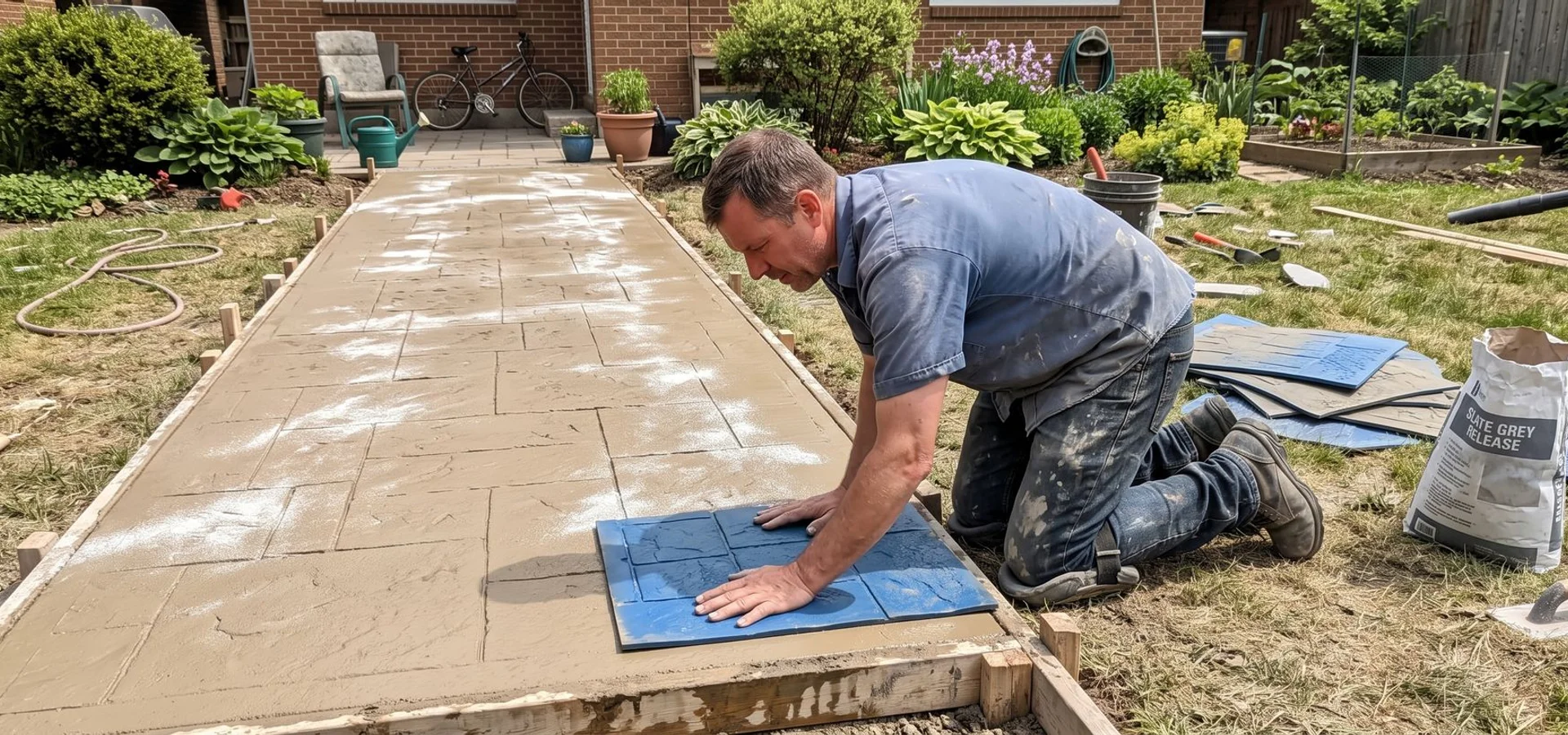
Stamped concrete is a poured, reinforced slab that gets colored and then imprinted while it is still workable. Texturing mats press a pattern into the surface during a window that lasts minutes, not hours, and the result reads as slate, cobblestone, brick or timber depending on the mat. You keep everything a slab gives you, continuity, strength, no joints for weeds, and you gain the look of laid stone.
Vances Concrete Craft builds these finishes across Chattanooga in Ashlar slate, cobblestone, European fan, and wood plank. Every pour carries integral color mixed through the concrete rather than painted on afterward, and every stamp gets a hand-applied antiquing release that settles into the low points the way weathering settles into real stone. We use texturing mats and pigments from established manufacturers, Brickform mats and Butterfield Color releases among them, because consistency in the material matters when the finish is the whole point.
Why the working window decides the result
The difference between stamped concrete that looks like stone and stamped concrete that looks like stamped concrete comes down to timing. Press too early and the mat sinks, blurring the texture and pushing water to the surface. Press too late and the imprint is shallow and inconsistent, with mat edges showing as ridges.
That window shifts with air temperature, humidity, mix design, and the slab’s exposure to sun and wind. There is no schedule for it. Somebody who knows what the surface should feel like under a gloved hand has to be standing on it, watching. On a Vances Concrete Craft job that somebody is Arthur Vance, who has been reading that window for 17 years and takes one project at a time specifically so he never has to leave a slab early.
Common problems we solve
A patio that looks like a slab, not an outdoor room
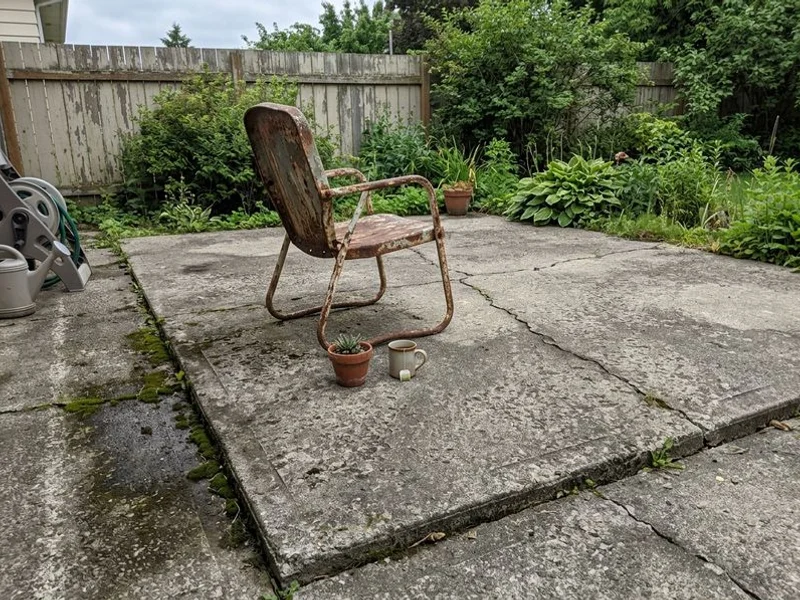
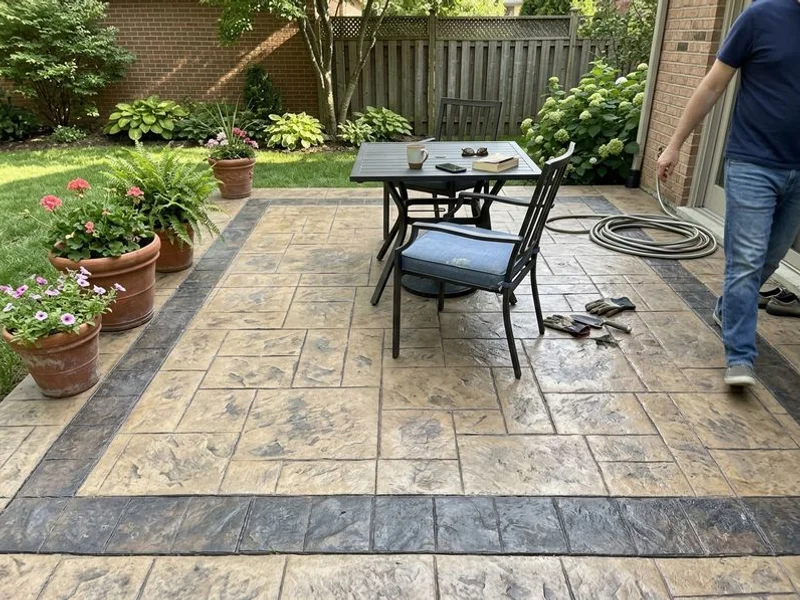
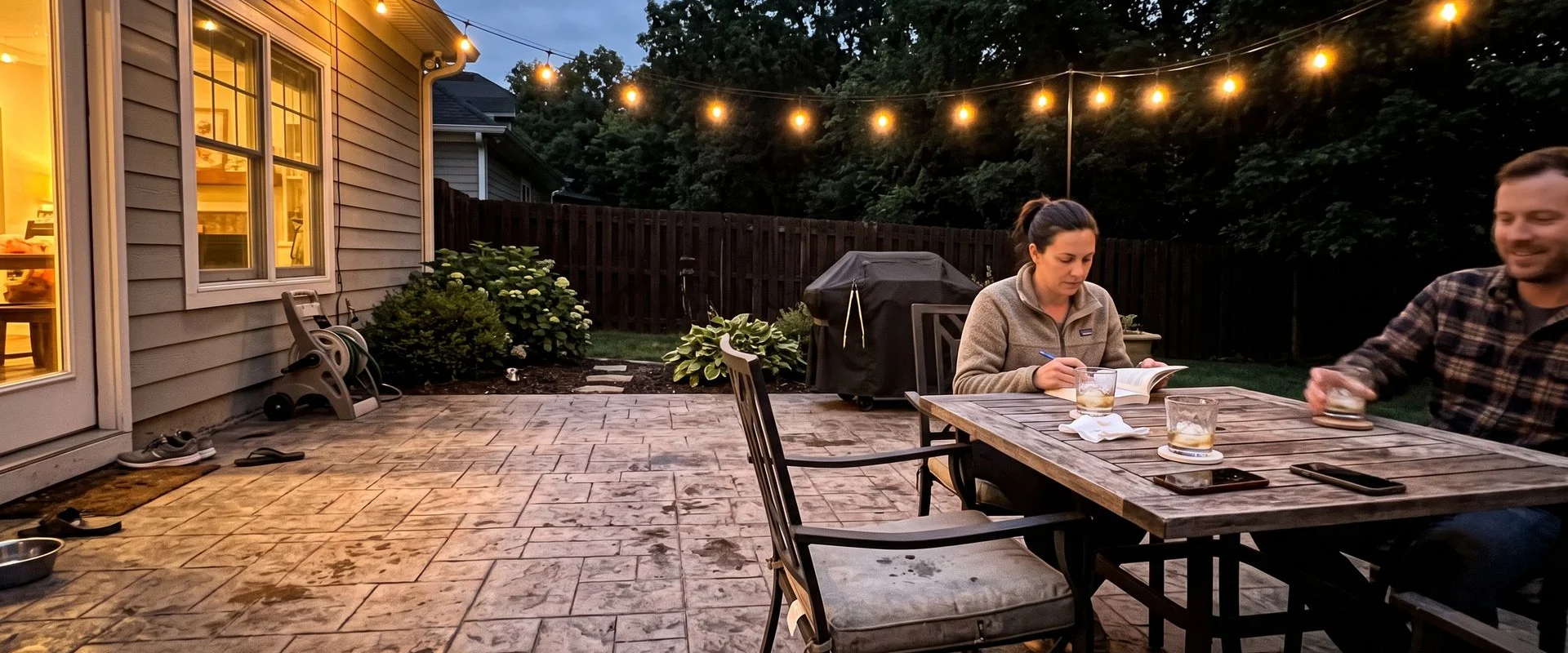
Plain gray broom-finished concrete is a floor. A multi-tone Ashlar slate stamp with a contrasting picture-frame border turns the same footprint into an outdoor room that ties into your home’s brick or stone. The structural work underneath is identical; the finish is what changes.
Pavers that will not stop needing attention
Unit pavers look right on day one and then start asking for maintenance. Weeds find every joint, the base washes out under the edges, and individual units settle out of plane. Stamped concrete gives you the same visual language as one continuous reinforced slab, with control joints in deliberate places rather than several thousand accidental ones. We set the two side by side in our guide to stamped concrete versus pavers.
A pool deck that is too hot or too slick
Dark, smooth surfaces near water are a bad combination. We spec lighter, heat-reflective color for pool surrounds and add a micronized slip-resistant additive such as SharkGrip into the high-solids solvent acrylic sealer. The deck stays cooler underfoot and holds traction when it is wet.
Surface damage after the first hard winter
Chattanooga cycles above and below freezing repeatedly through winter, which drives water in and out of the concrete surface. Unsealed decorative work spalls and loses color fast. Correct control joint and expansion joint spacing, an air-entrained mix, and a freeze-thaw-rated sealer on a two to three year cycle prevent it.
What is included in a stamped concrete project
Every project runs the same sequence: excavation to competent subgrade, a compacted crushed-stone base, reinforcement tied on chairs, forms squared and staked, then a 4,000 PSI mix with integral color placed, screeded, floated, and stamped. After the imprint sets, the release is washed off, control joints are saw-cut to a spacing that suits the slab and follows the pattern, and the surface is sealed once it has cured enough to take it.
Nothing in that sequence gets skipped to make a schedule work, because there is only ever one schedule to work around.
Where stamped concrete fits your property
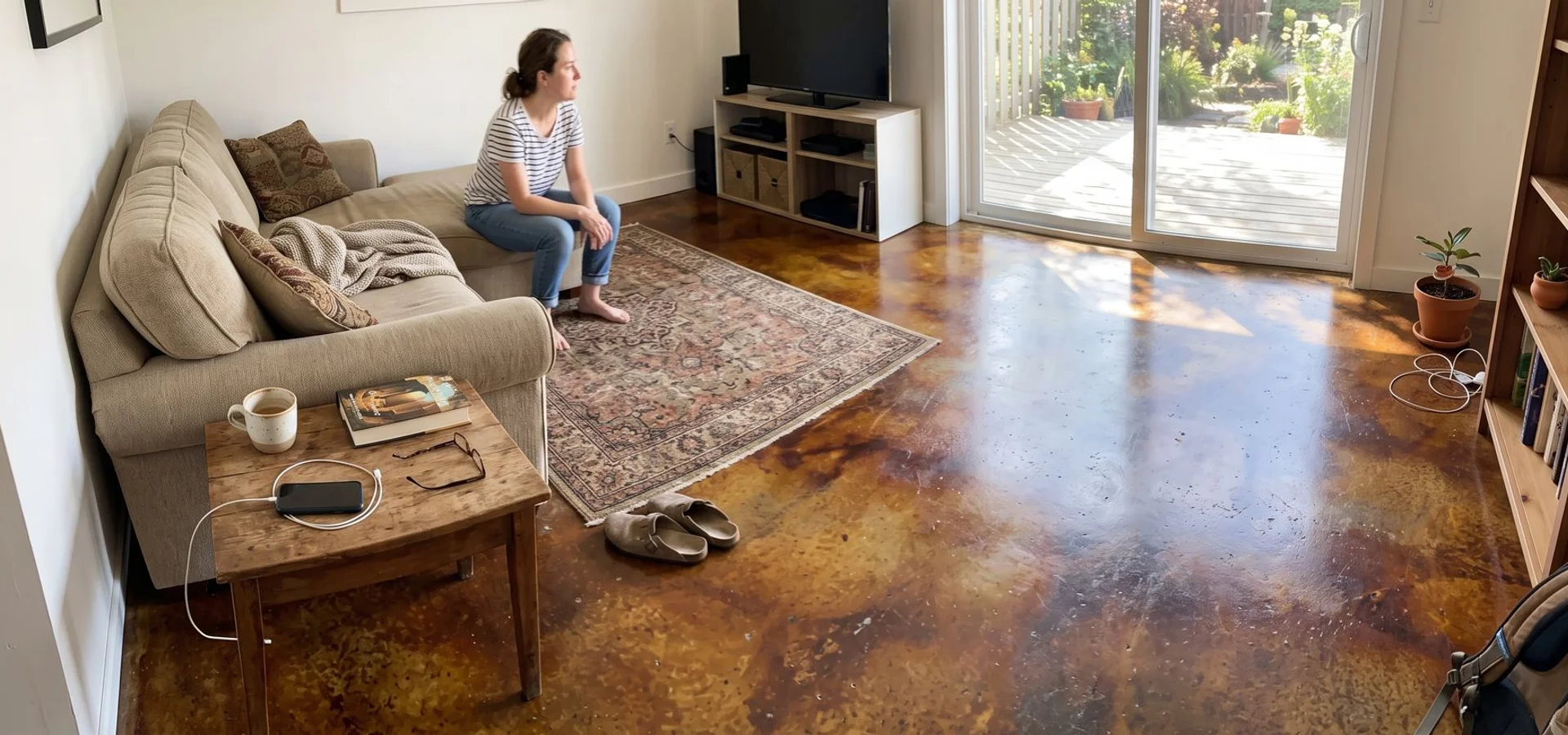
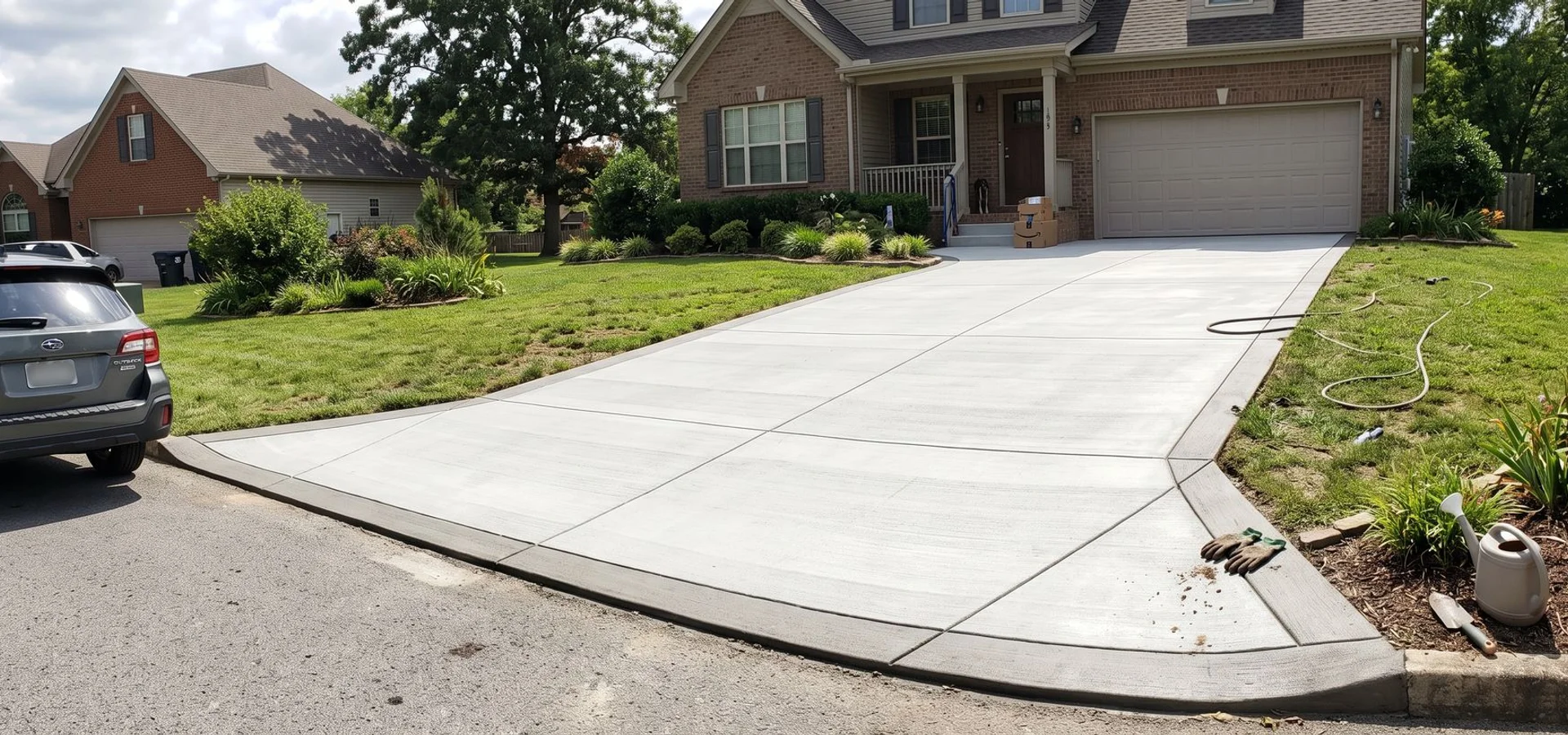
Patios and rear entertaining areas are the most common request, followed by pool decks, front entries and walkways, and decorative driveways. If you want texture and pattern, stamping is the answer. If you want depth of color on an existing interior or exterior slab, acid staining is usually the better route, and the two can be combined on the same surface for genuinely unusual results. Budgets vary with pattern, color layers, and border work, all of which we break down in our guide to stamped concrete cost per square foot in Tennessee.
How stamped concrete compares to the alternatives
| Stamped concrete | Pavers | Plain broom-finish slab | |
|---|---|---|---|
| Installed cost per sq ft | $12-$22 | Often higher (per-unit labor) | Lowest |
| Weeds in joints | None — one continuous slab | Common over time | None |
| Settling out of plane | Only if the base fails | Individual units settle | Only if the base fails |
| Recurring maintenance | Reseal every 2-3 years | Re-sand, weed, re-level | Reseal every 2-3 years |
| Decorative range | Pattern, integral color, antiquing release | Limited to unit shape and color | None |
| Repair approach | Fill and color-match | Lift and replace units | Fill |
The full cost side of that comparison is in our guide to stamped concrete versus pavers.