The real difference: one surface or several thousand
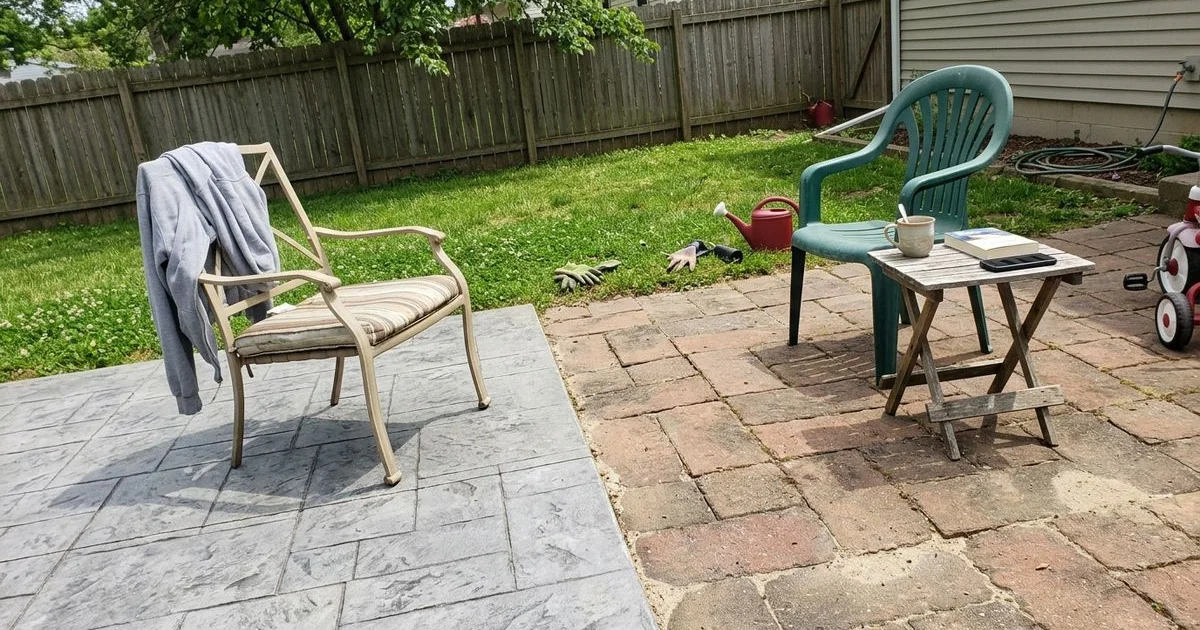
Everything else in this comparison follows from a single structural fact. Stamped concrete is one continuous reinforced slab. A paver patio is several thousand individual units resting on a bedding layer, held in place by edge restraint and jointing sand.
That difference determines cost, maintenance, failure modes, and how each surface looks after a decade. It is worth understanding before comparing prices, because the prices are comparing quite different things.
Upfront cost
Stamped concrete in the Chattanooga area typically runs $12 to $22 per square foot depending on pattern complexity, color layering, and borders. That covers excavation, base, reinforcement, the pour, the decorative work, joint cutting, and sealing. Full detail on what sits behind those numbers is on our stamped concrete installation page.
Our guide to stamped concrete cost per square foot in Tennessee breaks those figures down line by line.
Quality paver installations generally land above that, sometimes well above, because the labor is per-unit. Every paver is placed by hand, cuts are made at edges and curves, edge restraint is installed, and jointing sand is swept and compacted. Material cost is also higher for good units.
Cheap paver installs exist, but they usually save money on the base, which is exactly where a paver patio needs the investment.
Lifespan and how each one ages
| Stamped concrete | Pavers | |
|---|---|---|
| Typical service life | 25-30+ years with proper base | 25-30+ years, with periodic relaying |
| Main failure mode | Cracking if base moves | Individual units settling, joint washout |
| Weeds | None (no open joints) | Common in joints over time |
| Repair | Fill and color-match | Lift and replace individual units |
| Recurring maintenance | Reseal every 2-3 years | Re-sand, weed, re-level as needed |
| Winter behaviour | Sealed slab resists freeze-thaw | Joints and base vulnerable to washout |
Both can last decades. They just fail differently. A slab with a failed base cracks and needs replacing. A paver patio with a failed base does not crack, it goes wavy, and can be lifted and relaid, which is genuinely an advantage where you expect ground movement.
Weeds, washout, and settling
This is where most homeowners’ actual experience diverges from the brochure.
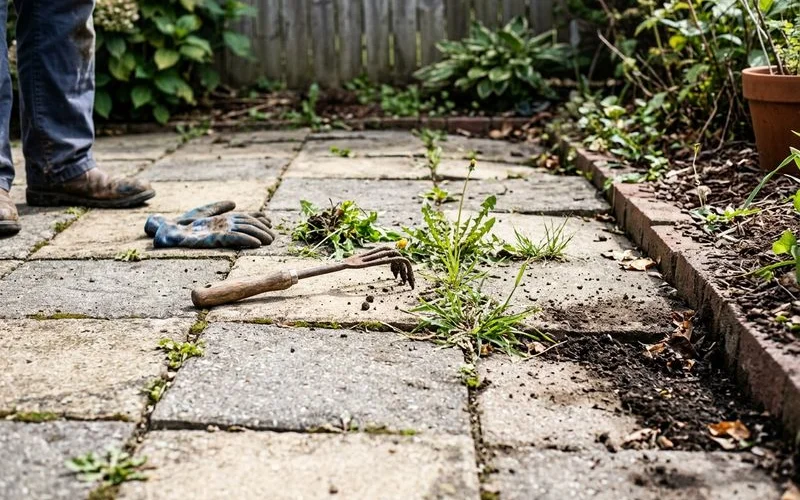
Paver joints are filled with sand, sometimes polymeric sand that hardens. Over time, water movement washes jointing sand out, particularly on any slope and around downspouts. Once the sand is gone, seeds germinate in the gap. Herbicide and re-sanding become annual jobs on some sites.
Settling follows. Bedding sand migrates, the base compacts unevenly, and individual units drop relative to their neighbours. On a walkway this becomes a trip hazard, and correcting it means lifting the affected area, fixing the base, and relaying.
Stamped concrete has no open joints. Its control joints are saw cuts in a solid slab, sealed with flexible sealant, and nothing grows in them. The surface stays in plane because it is one piece.
The site factor that decides it
On stable ground with good drainage, stamped concrete is lower-maintenance and usually cheaper. On ground that genuinely moves, expansive clay, fill that was never going to settle evenly, pavers’ ability to be lifted and relaid is a real advantage.
Maintenance you actually have to do
Stamped concrete: rinse it, keep de-icing salt off it, and reseal every two to three years. The reseal is a half-day job on a typical patio and restores color as well as protection. Skip it and the surface fades and becomes vulnerable to freeze-thaw damage.
Pavers: sweep, weed, re-sand joints as they wash out, and re-level sections when they settle. Sealing is optional but common on higher-end installations, and it comes with the same interval.
Neither is maintenance-free. Stamped concrete concentrates its maintenance into one predictable task every few years; pavers spread it across several smaller ongoing tasks.
When each one is the right answer
Choose stamped concrete if you want the look of stone with no joints to weed, a surface that stays flat, a lower installed cost, and maintenance you can put on a calendar. It suits patios, pool decks, walkways, and decorative driveway sections, which is most residential work in Hamilton County.
Choose pavers if your site has known ground movement, if you want the ability to lift and relay sections without demolition, if you specifically want the visual of individual units with real joints, or if you may need access to something buried beneath the surface later.
For most Chattanooga homeowners weighing a patio, the honest answer is stamped concrete: better installed value, fewer recurring tasks, and a surface that still looks deliberate at year fifteen.