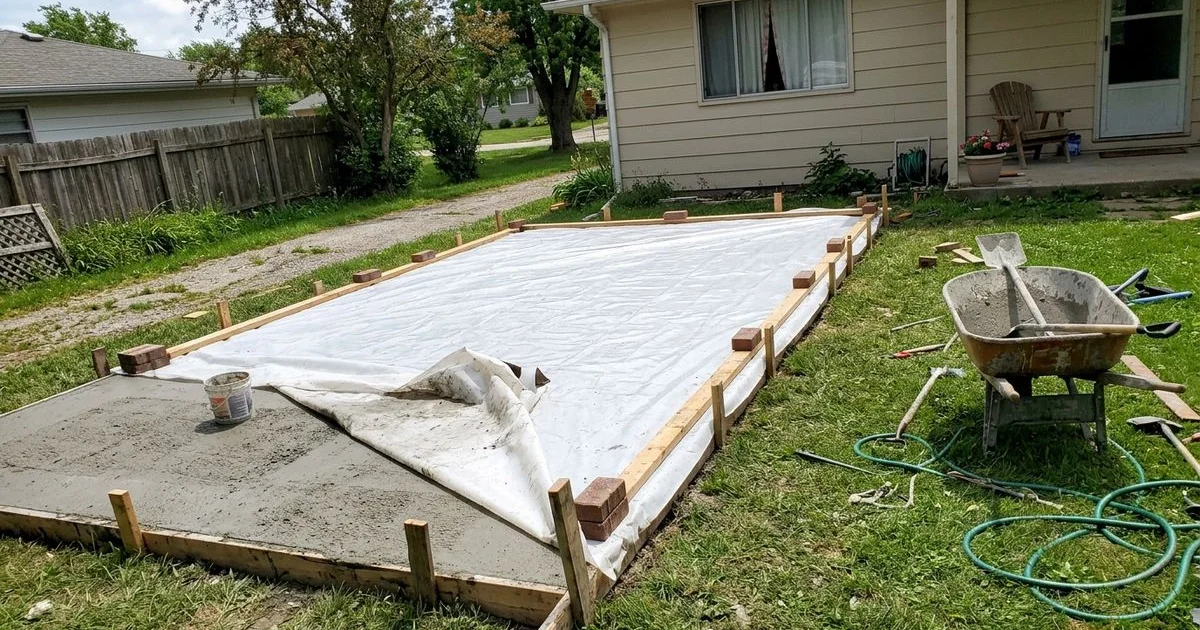
Curing is a chemical reaction, not drying out
The single most useful thing to understand about new concrete is that it does not harden by drying. It hardens by hydration: water in the mix reacts chemically with the cement, forming the crystalline structure that gives concrete its strength. That reaction needs water to keep going.
This is why a slab that loses moisture too quickly, through hot sun, wind, or low humidity, ends up weaker at the surface and more prone to plastic shrinkage cracking. It is also why we use curing membranes and, in some conditions, keep a slab damp during its first days. We are protecting the reaction, not waiting for it to dry.
Practically, that means the timeline below is about strength gain, not about when the surface stops feeling wet. Sealing has its own waiting period on top of this one, covered in our guide to the best concrete sealer for the Tennessee climate.
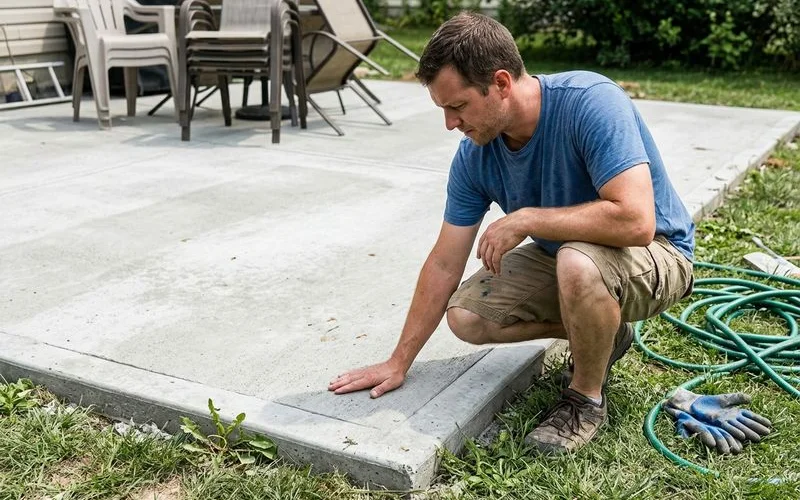
The three timelines that matter to you
| Milestone | Typical timing | What is safe |
|---|---|---|
| Walk-on | 24-48 hours | Foot traffic only, no pets, nothing dragged |
| Light use | 3-7 days | Patio furniture, foot traffic, careful use |
| Drive-on | 7 days | Normal passenger vehicles |
| Full design strength | 28 days | Heavy vehicles, dumpsters, equipment |
24 to 48 hours: walk-on. The surface is hard enough to take careful foot traffic. Keep pets off it, because claws mark green concrete easily, and do not drag anything across it.
Seven days: drive-on. For a driveway pour, normal cars are fine at about a week. This assumes a correctly specified slab. On a reinforced concrete driveway built to our standard, seven days is a comfortable threshold; on a thin, under-reinforced slab it is a gamble regardless of the calendar.
28 days: design strength. Concrete continues gaining strength for years, but the 28-day mark is where it reaches the specified figure, 4,000 PSI on our residential structural pours. Hold off on moving trucks, dumpsters, and heavy equipment until then.
The one that costs people money
A moving truck or a dumpster parked on a two-week-old driveway can crack a slab that would have carried it easily at 28 days. It is worth planning deliveries around the pour date.
What changes the timeline
Temperature. Cold slows hydration dramatically. A slab poured in November in Chattanooga will gain strength more slowly than the same slab in July, and in near-freezing conditions the reaction can effectively stall. Hot weather does the opposite and brings its own problem: the surface sets too fast, which narrows the finishing and stamping windows and increases shrinkage cracking risk.
Humidity and wind. Both drive evaporation. High wind across a fresh slab on a dry day pulls water out of the surface fast, which is precisely what a curing membrane is there to prevent.
Slab thickness and mix design. A thicker section and a mix with different cementitious content follow slightly different curves.
Rain. Light rain shortly after finishing can mar the surface. Heavy rain on a fresh slab is a genuine problem. This is why pours get rescheduled around forecasts rather than pushed through.
When the slab can be sealed
Sealing is where curing timelines matter most, because applying a sealer too early traps moisture that still needs to leave the slab.
For decorative surfaces, we generally seal once the slab has cured enough to accept the product, which is usually a matter of weeks rather than days, and always in dry conditions with reasonable temperatures. Rushing that step causes hazing, blushing, or adhesion failure, and it is one of the more expensive mistakes to fix because it means stripping and re-coating.
This is also the argument for booking exterior projects with the season in mind. A pour finished in September gets sealed comfortably. A pour finished in late November may sit waiting on weather. Once the surface is protected, the ongoing protective sealing cycle in Tennessee runs every two to three years.
What cured means for different finishes
Plain and broom-finished concrete follows the standard timeline above with no complications.
Stamped concrete adds a step: the antiquing release has to be washed off, joints are cut, and then the slab cures before sealing. You can walk on it early, but the finish is not complete until sealed.
Acid-stained floors are a different sequence entirely. Staining happens on an existing, cured slab, so the timeline is about stain reaction, neutralizing, drying, and topcoat cure rather than concrete hydration. Interior floors typically return to light use within a day or two of the final coat, with full chemical resistance a little later.
The short version: be patient for the first week, plan deliveries around 28 days, and let the sealer go on when conditions are right rather than when the calendar says so.